There’s a widespread belief that war is all about money and that war is good for business. For instance:
- Many argue that America attacked Iraq only to get access to cheap oil, even though the US was already buying Iraq’s oil before the war and it became far more expensive to buy that same oil after the war.
- America attacked Panama in 1989 for the money received from controlling the Panama Canal, which, come to think of it, the US was already getting (and would give up a few years later, as promised).
- America went into Somalia because, well, we’re not sure why, maybe sand is valuable.
- America attacked the tiny Caribbean island of Grenada because, well, there must be some vast economic interest there too.
If war is just about money, these cases struggle to prove that. It's overly simplistic to say, "Money explains everything."
Why do we go to war?
Nations go to war for many reasons. Money usually is a major reason, but it’s often not the only reason or even the main reason.
There are other factors, such as:
- Religion
- Ethnic hatred
- Language issues
- Settling an ancient score
- Stopping a genocide (or some other injustice)
- Having a disproportionate number of unemployed (and angry) young men in a society (i.e., a youth bulge)
- The “he-hit-me-first” excuse
- Getting back territory “that was historically ours!”
- Having politicians with big egos and small penises.
Is war good for business?
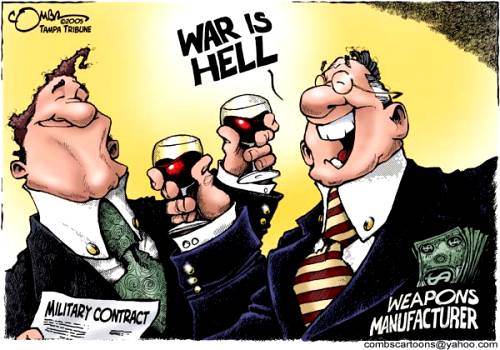
“Never mind!” cry the cynics! “War is still good for business!”
Really? Great! So let’s drop a few atomic bombs on Spain to help their economy. Let’s help out France by carpet bombing them.
Oh, wait, they say it’s great only for the winner’s economy? Oh, OK. Let's see:
- Poland and Belarus were victorious in World War II. By the end, they were mostly rubble and up to a third of their people were killed.
- France also won the war, but lost nearly half of its national wealth.
- The victorious USSR saw 1,700 towns and 70,000 villages utterly destroyed.
Sounds like that really helped those winners out, doesn’t it?
Oh, wait, they say it’s just good for the victor’s economy who is untouched by war. America was spending 90% of its federal budget on its war effort and going massively in debt during WWII (compared to 20% today).
What do you think would have been a better use of that money: building things that go boom and then disappear after one use, or building something that lasts and can be used for many years?
A war is an extremely inefficient way to stimulate an economy. If wars helped economies, then Africa would have the world’s leading economies.
The reality
The truth is that wars do not help the economy; they devastate economies.
- That’s why the stock market collapses when there are signs of war.
- That’s why investments halt.
- That’s why people stop spending money and start stuffing money and gold under their mattresses.
- That’s why businesses lay off employees and stop giving raises.
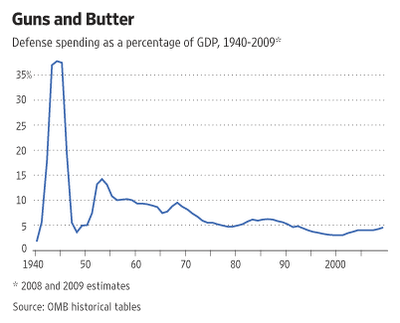
All this kills the economy and business. It's much more efficient to spend that money and resources on butter (and other useful items) than on guns.
But don't some people benefit?
Yes, there is one little sector of the economy, the defense industry, which is better off during war—their stock prices go up.
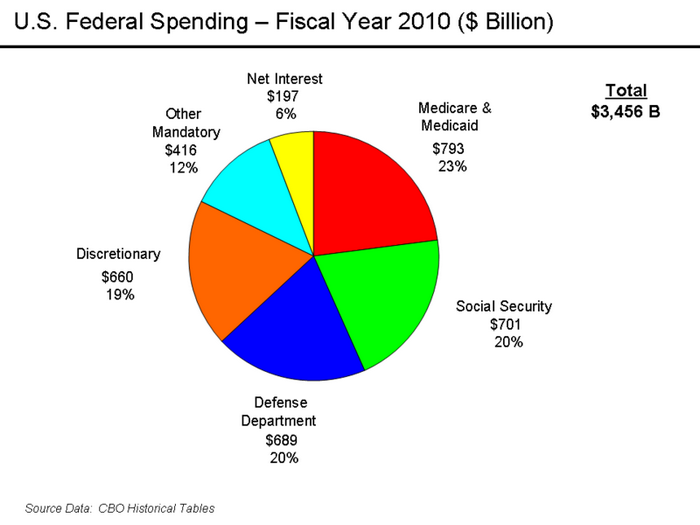
Some may say, “The US spent $685 billion on the military in 2010! How the hell is that a ‘little sector’?” Just put that $0.68 trillion into the perspective of America’s $15 trillion GDP and you’ll see that military spending is just 4.5% of the US economy—hardly a dominant sector.
Therefore, given that the vast majority of lobbyists and campaign donors are not involved with the military, politicians would be fools to embark on a war, since most politicians are usually re-elected only if the economy is going well. Franklin Roosevelt knew this, which is one reason he wanted to stay neutral during WWII.
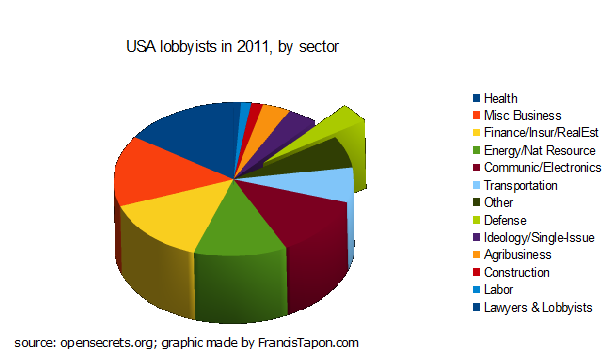
The 2011 lobbyist spending by sector in the USA reveals that 4.2% of the money spent on lobbyists is devoted to the military sector. That's inline with the 4.5% of the GDP. That clearly shows that the military lobby isn't an overwhelming force on Capitol Hill.
All the other industries in that pie chart would much rather have the government spend $100 billion on their industry than on the military industry. That's why they fight hard everyday to seduce as many politicians as possible. They want to divert money away from the military and put it in their industry instead.
Who really wins the most?
It doesn't pay to go to war.
It’s far better to sell stuff to the idiots who are killing each other than to be one of the idiots in the fight. That’s why Argentina, during WWII, became one of the richest countries in the world: it sold goods to the countries that were spending their national wealth to kill people.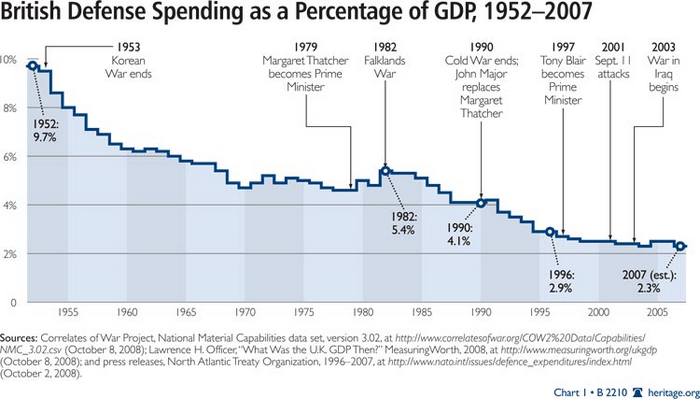
Nations go to war for the same reason that one person murders another. Money is frequently a motivator, but not always.
Often, after the dust settles, the murderer regrets what he did. "Gosh, that was stupid and unprofitable," he says. Nations do the same because they are reflections of humanity.
Therefore, next time someone tells you that “war is good for business and helps the economy,” tell them to read this article and say:
- Wars hurt economies.
- We often don’t fight wars just for money.
- Wars only benefit a small minority who are making weapons.
- There are plenty of other "powers" that are lobbying the government to not go to war and/or to spend its resources elsewhere.
- The biggest beneficiaries are countries that are not in the war but are supplying the warring nations.
Stupidity is also a gift of God, but one mustn’t misuse it. — Pope John Paul II
This article is an excerpt of The Hidden Europe: What Eastern Europeans Can Teach Us.
After I wrote this article, I found a more detailed article about this topic for those who want to learn more.